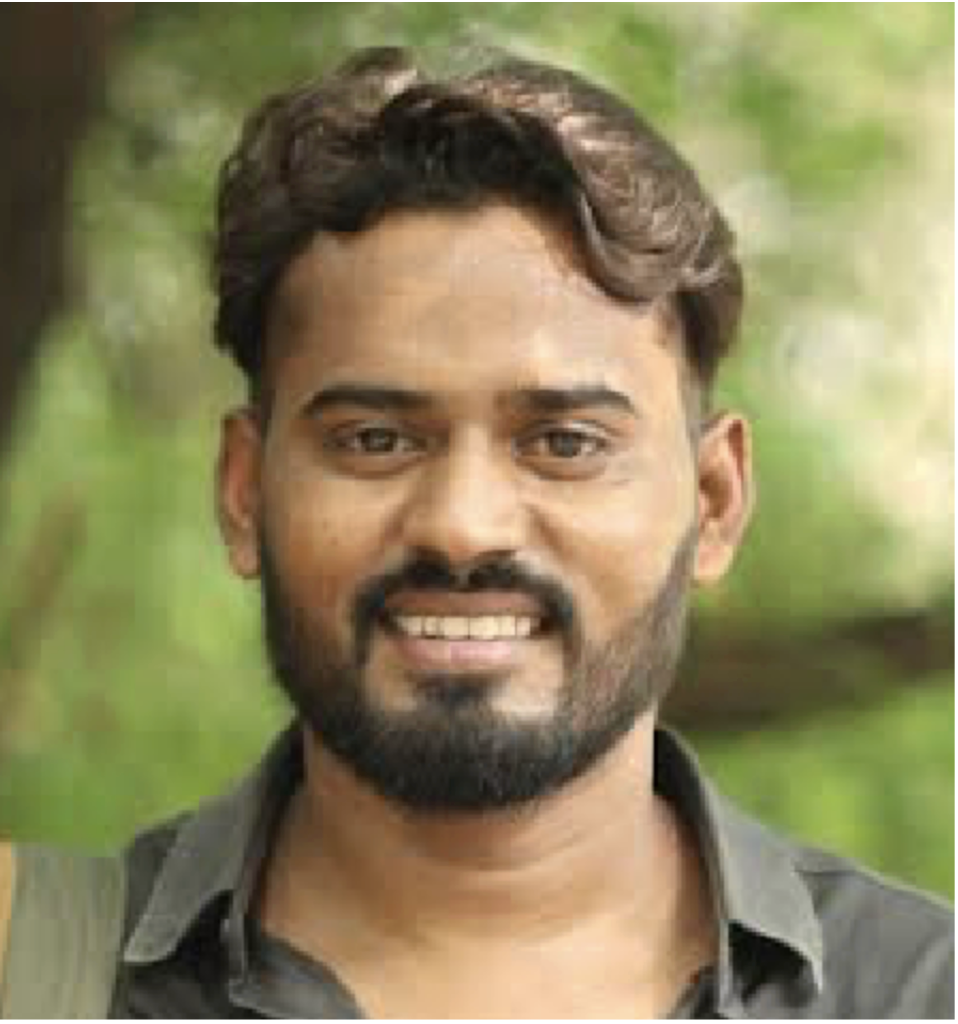
13 Essays & Reports by Ravindra Dhanka
Ambedkar Workshop Held in Kanjro Ki Dhaani, Rajasthan
My name is Ravindra Dhanka, and I am a social activist from Rajasthan. With the support of Humanist Mutual Aid, I organized my first Ambedkar workshop in my village, Kanjro Ki Dhaani, Gopalpura Village, Kotputli-Behror District, Rajasthan. This workshop was very important to me because it is the beginning of a new awareness movement in my community.
For my first workshop, I decided to work only with the women and girls of my community. I chose to start with them because women face many struggles in society and their voices are often ignored. I strongly believe that real change in any community begins with women.
During the workshop, we discussed three main topics: the struggles of women in India, the thoughts of B. R. Ambedkar on women’s freedom, and the relevance of his ideas in today’s time. I explained that most people in our community had already heard the name of Dr. Ambedkar before, but they did not know much about his life, his struggles, and his ideas in depth. This workshop helped them understand him better and see why his thoughts are still so important for our lives today.
I spoke about how Dr. Ambedkar believed that without the freedom and education of women, no society can truly progress. We talked about issues such as lack of education, early marriage, financial dependence, domestic violence, and the extra pressure faced by women from marginalized communities.
An open discussion was held during the workshop, where many women and girls shared their personal experiences. For several of them, it was the first time they spoke openly in front of others. Some shared how they were forced to leave school early, some talked about family pressure, and some spoke about their hopes for their future. The discussion was emotional and honest. I could feel that the women were relieved to finally have a space where they could speak freely.
After the session ended, refreshments were provided to everyone. The women stayed back, talked among themselves, and continued the discussion informally. The program felt more like a community gathering than a formal meeting.
In the following days, the workshop became a topic of discussion in the village. Many people spoke about what they learned about Dr. Ambedkar and how the workshop helped them understand his ideas more clearly. Several families appreciated that such a program was organized in the village for the first time. Some villagers also showed interest in attending future workshops.
How the Idea of a Hindu Nation Reaches a Tribal Village
by Ravindra Dhanka
I live in a small tribal village in Rajasthan where the rhythm of life is shaped by farming seasons, water scarcity, family labor, and daily struggle rather than by national political debates, yet in recent years the idea that India is mainly a Hindu nation has entered even our quiet lanes through mobile phones, social media videos, political speeches, school lessons, and television discussions, and it has slowly begun to change the way people see one another and the way they understand belonging.
Earlier our village knew difference without fear because tribal customs, local Hindu practices, folk traditions, and shared village rituals flowed together without anyone needing to prove that they were more Indian than someone else, and religion remained a personal matter tied to family and tradition rather than a political test of loyalty, yet today people hear again and again that to truly belong one must follow a specific religious identity, and this repeated message gradually settles into public thinking.
Dr B R Ambedkar clearly warned that when the state begins to favor one religion it destroys the foundation of democracy because citizenship then becomes measured through belief rather than equality, and this danger is no longer theoretical for us because we now feel the slow pressure of being measured through cultural behavior rather than through shared human dignity.
I notice change not through violence but through quiet shifts in daily life where people hesitate before speaking freely, where festivals feel politically loaded instead of purely joyful, where food habits invite commentary, and where friendships carry invisible tension that did not exist before, and these changes have not risen naturally from village life but have been carried into it by a national political climate that rewards religious dominance.
The idea of a Hindu nation is presented as cultural pride and unity yet its practical effect is the creation of a hierarchy of belonging where some people feel born into acceptance while others feel as if their place must be proven again and again through behavior, symbols, and silence, and this constant pressure damages the trust that once held communities together beyond political identity.
For tribal communities the danger becomes deeper because our identity does not rest primarily on formal religion but on forests, land, collective labor, seasonal survival, and ancestral practices that do not fit neatly into rigid ideological definitions, and when one religious idea of the nation expands it slowly pushes our culture toward invisibility without directly attacking it.
Ambedkar opposed the idea of religious nationalism because he understood that when religion captures the state it uses law to enforce belief and social power to suppress difference, and he insisted that India must remain secular so that every community can live without fear of majority domination, and his warning today feels less like history and more like lived reality.
The real harm of this ideological shift is not only political but emotional and social because it teaches children to look at neighbors through religious categories before looking at them as fellow human beings, and it quietly replaces shared struggle with mutual suspicion.
A strong nation grows when its people feel safe in their difference, when disagreement does not threaten belonging, and when identity does not become a political weapon, yet when difference is framed as a threat the social fabric weakens even as political power expands.
If India closes its many windows of belief to create a single official identity then the air inside the nation will grow heavy and restricted, and a society that cannot breathe freely cannot remain democratic for long no matter how loudly unity is proclaimed.
Caste Discrimination and the Distance Between Law and Life
by Ravindra Dhanka
In government documents and political speeches caste discrimination is often described as a wound that is healing through laws and welfare schemes, yet in the everyday reality of my community it continues to shape access to education, employment, land, health care, and even self confidence in ways that legal language alone has not been able to erase.
Schemes meant for Scheduled Castes and Scheduled Tribes are announced with promise and pride yet they pass through layers of administration, delay, corruption, and political filtering, and by the time they reach villages they often arrive late, incomplete, or dependent on personal connections rather than on rights.
Dr B R Ambedkar never treated caste as a moral weakness of individuals but as a powerful social system that controlled opportunity and dignity, and he warned that without destroying this system at its roots political equality would remain hollow despite constitutional guarantees.
In my work I see how caste continues to organize daily life even when few openly speak its name because it silently decides whose children remain in school, whose illnesses receive timely treatment, whose land remains protected, whose voices are interrupted, and whose applications move quickly through offices.
Scholarships arrive after students have already dropped out, hostels function without proper care, health programs exist without transport access, and each such delay quietly trains the poor to accept injustice as normal administrative difficulty.
Caste discrimination today often hides inside procedure rather than open insult because it survives through paperwork, waiting, lost files, repeated visits, and unanswered complaints where nobody publicly denies your right yet the system quietly refuses to act with urgency.
Ambedkar imagined annihilation of caste as a social revolution that would redistribute dignity, opportunity, and power rather than simply offer symbolic inclusion in existing hierarchies, yet when current policy retreats from this vision inequality continues through softer language.
Budget cuts to welfare, reduced institutional support, and increasing reliance on personal networks slowly convert rights into favors, and favors always strengthen hierarchy because they concentrate power in the hands of those who already control access.
The damage of caste discrimination is not only economic but psychological because persistent delay and denial slowly erode self belief and ambition across generations as children learn early that effort alone is never enough.
Until caste is confronted not only through laws but through strong public investment, firm accountability, and serious social reform the promise of equality will remain suspended between hope and disappointment for millions in communities like mine.
Privatization and the Fading Sense of Security
by Ravindra Dhanka
In my village people do not speak of economics using technical language yet they fully understand what it means when electricity becomes expensive, when farmland is acquired, when regular jobs become contract based, and when health care becomes a financial negotiation rather than a public guarantee, and all of these changes are deeply connected to the steady expansion of privatization into areas once protected by the state.
Privatization is presented as efficiency and growth yet for the poor it often feels like the slow disappearance of state responsibility as essential services transform into market products that must be purchased rather than accessed as rights.
Dr B R Ambedkar believed that political democracy would remain fragile without economic democracy because freedom loses meaning when survival becomes uncertain for large sections of the population, and this warning resonates strongly today as economic growth and social insecurity expand side by side.
When water, electricity, health care, education, and even food distribution begin to operate primarily on profit the poor gradually stop being citizens with guaranteed rights and become customers whose access depends on unstable income.
In tribal regions privatization often arrives with the language of development yet it leaves behind displacement, shrinking common resources, loss of traditional livelihoods, and dependence on unstable labor markets that offer no long term security.
Large companies can absorb loss, shift locations, and wait patiently for profit while villagers cannot postpone hunger, illness, or education, and this unequal capacity to wait itself becomes a mechanism of injustice.
Compensation may be offered for land yet compensation cannot rebuild community bonds, cultural practice, or the feeling of rooted security that comes from living generations on the same land.
Ambedkar supported land reform, collective agriculture, and strong public control over essential resources because he understood that unchecked markets naturally concentrate power and wealth unless restrained by social responsibility.
When the state withdraws from essential services the poorest become trapped between rising costs and unstable livelihoods while those with wealth gain greater control over both resources and opportunity.
If development continues to be measured mainly through profit and investment without equal concern for security, dignity, and access then progress will continue to lift some while leaving others suspended in permanent uncertainty.
Freedom of Speech and the Growth of Silence
by Ravindra Dhanka
In small villages freedom of speech does not appear as televised debates or courtroom arguments because it exists in smaller acts such as asking questions at a meeting, criticizing local authority, organizing people, or expressing disagreement without fearing punishment.
In recent years this space has steadily narrowed through the quiet spread of fear as arrests of activists, journalists, and scholars under strict laws send a clear message that questioning power can bring serious consequences.
Even when such cases occur far from our villages their effect travels quickly through news, social media, and local rumor, and fear settles into daily behavior as people lower their voices, withdraw from meetings, and advise their children to stay silent.
Dr B R Ambedkar emphasized freedom of expression because he believed that democracy without criticism becomes hollow ritual, and when citizens stop questioning authority power begins to grow without limit.
In my work I have seen villagers hesitate to attend gatherings, women fear social consequences of participation, and youth erase opinions from their phones because a single statement can now follow a person for years.
Self censorship grows not through force alone but through uncertainty because people cannot clearly see what is permitted and what may suddenly become dangerous, and in such conditions silence feels safer than speech.
A society may continue to vote and celebrate constitutional values yet still lose democratic substance when fear becomes stronger than conscience.
When people censor themselves power no longer needs to suppress dissent openly because silence becomes its strongest protection.
If the vision of Ambedkar is to remain alive in practice rather than memory then freedom of speech must be felt as safe not only in capitals and courts but also in small villages where democracy is lived in ordinary conversations.
Forest Rights and the Daily Struggle for Land and Dignity
by Ravindra Dhanka
I was born in a tribal village in Rajasthan where land is not just something we own on paper but something that holds our past, our daily food, our work, and our future, yet even though my people have lived on this land for generations we still live with the constant fear that one order, one project, or one official decision can take it away from us at any time.
For people outside, land is often seen only as property or investment, but for us land means where our children learn to walk, where our elders are buried, where our crops grow, and where our festivals take place, and when this land is threatened it feels as if our entire life is being shaken at once from its roots.
Many families in my area depend on small farming, forest produce, and animal grazing for survival, and when forest laws become strict without understanding our way of life people suddenly become illegal on the same land that once gave them food, where a woman who collects firewood for cooking is treated like a criminal and a man who grazes animals is treated like an offender, creating fear in daily routine where even normal actions begin to feel dangerous.
Big projects often come with big promises of roads, factories, electricity, and jobs, but for villagers the first meaning of such development is usually displacement because people are asked to leave their land, move their homes, and trust that something better will come later, yet money finishes fast while land carries life for generations.
When families are displaced they do not only lose farmland but they also lose social bonds, shared labor systems, access to water, traditional knowledge, and emotional security, and even if some compensation is given it cannot rebuild relationships that were built slowly over decades.
Dr B R Ambedkar spoke clearly about land reform and economic security because he knew that political freedom remains incomplete when people do not control basic resources needed for survival, and he understood that when land and livelihood are insecure people become easy to control, easy to silence, and easy to exploit.
In many cases consent for land projects is shown on paper but villagers do not fully understand what they are signing because documents are written in difficult language, meetings happen far from the village, and decisions arrive from offices people have never entered, allowing power to move silently while the affected families remain confused and helpless.
When land is taken away elders lose their authority because they no longer guide farming life, youth lose direction because traditional work disappears, and children grow without connection to ancestral roots, and culture weakens not because people want to forget it but because survival pressure becomes stronger than memory.
Forest protection is important for climate and environment, but protection without justice becomes another form of violence because Adivasi people protected forests long before modern laws existed, and treating them as enemies of nature is deeply unfair and painful.
Many people now live with the fear that today they are villagers and tomorrow they may become migrants in cities far from home, working in unsafe conditions with no security, all because the land that once protected them was taken without their real consent.
True development should never turn original caretakers of land into strangers on their own soil, and it should make tribal people partners in growth instead of obstacles in the path of projects.
Without land dignity becomes fragile, and without dignity democracy becomes weak, because when people lose control over food, water, shelter, and work they also lose their voice in the larger system.
Ambedkar wanted a society where freedom was not only written in the Constitution but also lived in daily life through security and dignity, and until land justice becomes real for tribal communities that freedom will remain only a promise on paper.
Education as Escape and as Struggle in Tribal India
by Ravindra Dhanka
From the time we are small children we are told again and again that education is the only way to leave poverty behind and build a better future, and every parent in my village carries this hope in their heart as they watch their children walk toward school with dusty feet and schoolbags that often carry more dreams than books.
For many families education is seen like a bridge that can take their children from hard village life to a safer life with respect and stability, yet this bridge is weak in many places and broken in others, and many children fall through the gaps not because they lack intelligence but because the system is not built for their reality.
Schools exist in many tribal areas but the condition of these schools tells another story where classrooms are crowded, teachers are often absent, learning material is limited, and children sit quietly without fully understanding what is being taught, and after some time silence turns into defeat.
Many children walk long distances to reach school, crossing fields, roads, and sometimes forest paths, and during rain and extreme heat attendance becomes irregular not out of choice but out of exhaustion, and slowly learning begins to feel like a burden rather than a door to freedom.
Language becomes one of the biggest hidden walls in education because many tribal children grow up speaking local dialects at home while formal education arrives in Hindi or English, and when a child cannot express thoughts in the classroom language shame slowly grows inside them and their confidence quietly disappears.
This loss of confidence is more dangerous than any physical barrier because once a child believes that they are weak at learning they stop trying even when they are capable, and later when exams fail to reward their effort they leave school believing education was never meant for them.
For girls this struggle becomes even heavier because they are asked to balance school with house work, water collection, cooking, and care for younger siblings, and many families believe that educating sons is safer investment than educating daughters, especially when money is short.
Early marriage still steals the education of many girls as responsibility replaces childhood before learning can take root, and once a girl leaves school it becomes very hard for her to return because society quickly redefines her role. The pandemic created another invisible wall when education moved online because many families do not own smartphones, electricity is unstable, and network is weak, and suddenly learning became dependent not on curiosity but on digital access that many tribal families simply did not have.
Children sat outside shops to catch signal, borrowed phones from neighbors, and missed classes without being counted, and when schools reopened many had already forgotten the rhythm of learning.
Dr B R Ambedkar believed deeply that education is the strongest weapon for the oppressed because he had lived the struggle of learning in hostile conditions and still refused to surrender his dream, and he proved that education can break the walls of caste, poverty, and exclusion when real support exists.
Yet today many tribal children remain far from that support as scholarships arrive late, hostels are unsafe or overcrowded, transport is costly, and good teachers prefer to work in cities where facilities are better.
Even when support exists it often feels like a race with time where children must survive years of struggle before help finally reaches them, and many are already lost by then.
There are some success stories where children from tribal villages become teachers, nurses, social workers, and activists, and these stories give hope to many families, yet these children succeed not because the system helps them easily but because they fight through layers of difficulty that others never have to face.
For every one child who succeeds there are many whose talent disappears silently into farm labor, domestic work, construction sites, and early family responsibility, and no official record counts their lost potential.
Education should not feel like a gamble where only the lucky reach the destination while others are left behind on the road, and it should not depend on where a child is born, what language they speak at home, or how much money their parents earn.
True education must travel to the child instead of waiting for the child to cross impossible distances, and it must speak the child’s language before asking the child to speak its own.
Ambedkar dreamed of a nation where education would break chains instead of reinforcing them, and until schools in tribal areas become strong, safe, supportive, and local reality friendly that dream will remain incomplete.
Education should not only teach children how to read and write but also how to believe in themselves, and when belief disappears learning stops long before school ends. For tribal India education remains both a hope for freedom and a daily struggle for survival, and this contradiction continues to shape the future of millions of children whose only mistake was being born far from power.
Women as the Invisible Backbone of Tribal Resistance
by Ravindra Dhanka
In my village life begins with the sound of women moving before sunrise as they sweep the ground, light the fire, prepare food, and wake the children, and life ends at night when they are the last to sleep after finishing every duty that the day demanded from them, yet even after carrying the weight of the entire household and much of the community they are rarely seen as leaders or decision makers.
From childhood a tribal girl learns how to balance work and silence at the same time because she is taught how to cook, clean, collect water, take care of animals, and look after younger siblings while also being told how to remain polite, patient, and strong without complaint, and this early training shapes her life in ways that are both powerful and unfair.
Women work in the fields with men, yet their labor is often described as help instead of real work, and when crops grow and harvest comes their contribution is taken as natural duty rather than skilled effort that deserves equal respect.
When there is shortage of food women eat last, and when there is sickness in the family women care first, and when money is not enough women quietly reduce their own needs so that children and elders do not suffer, and this silent sacrifice continues through years without applause.
During village struggles women stand at the front in ways that rarely reach records because they organize food during protests, manage care for children while meetings happen, speak bravely when police arrive, and protect families when tension rises, yet when leadership is announced their names often disappear behind male figures.
Dr B R Ambedkar believed that the measure of progress of any society can be seen through the condition of its women, and he worked for women’s rights in education, marriage, inheritance, and political life because he understood that freedom without women’s dignity remains incomplete.
Yet tribal women today still face double injustice where they suffer both as women in a patriarchal society and as members of marginalized communities in an unequal system, and this double burden shapes every part of their daily life.
Health remains one of the most ignored struggles of tribal women because many suffer from anemia, weakness, repeated pregnancy, untreated illness, and mental exhaustion, and medical care is often far away, expensive, or unavailable when it is most needed.
Many women continue to work even when their bodies are tired and in pain because rest is seen as weakness and duty is seen as strength, and over time this belief slowly damages both body and spirit. Girls grow up watching their mothers carry endless responsibility and they learn courage early, yet they also learn limitation early because they see how sacrifice becomes a lifelong expectation, and many dreams slowly shrink inside daily survival.
Education offers some girls a way to imagine a different life but social control remains strong because even educated girls face pressure to marry early, reduce ambition, and accept traditional roles, and when they resist they often face emotional and social punishment.
Change begins when women find safe spaces to speak, and when self help groups, awareness meetings, and community circles form women slowly begin to share their stories, and when one woman speaks her truth others find courage to speak their own.
Financial independence through small savings groups and skill training gives many women their first experience of decision making power because even small income changes how a woman is heard inside her family.
When women begin to understand their legal rights they slowly realize that violence, denial, and silence are not fate but injustice, and this realization itself becomes an act of resistance.
Tribal resistance has always survived because women protected it in invisible ways through food, memory, culture, care, and courage, and without them no movement would last beyond a single day.
Yet recognition still remains limited because when stories are told they often focus on male leaders, and when victories are celebrated they rarely carry the names of the women who sustained the struggle quietly in the background.
The future of tribal communities depends not only on land, education, and livelihood but also on how fully women are allowed to speak, lead, and shape decisions, because no society can rise on the strength of only half its people.
Ambedkar did not fight only for the political rights of oppressed communities but also for the social freedom of women because he knew that real democracy begins inside the home before it reaches the state.
When tribal women rise in confidence, education, and leadership the entire community rises with them, and when they are held back the entire community walks with one foot chained.
The history of resistance in my community is written in the quiet bravery of women who endured pain without recognition, who held families together during crisis, and who taught children to stand tall even when the world tried to push them down.
They may not always lead from the stage but they lead from the roots where strength is grown slowly and deeply, and without those roots no movement can survive the storms that power always brings. True justice will arrive not when women are praised as symbols of sacrifice but when they are treated as equal partners in power, choice, and leadership, and until that day the backbone of tribal resistance will remain strong but unfairly invisible.
Migration, Informal Labor, and the Disappearance of Home
by Ravindra Dhanka
Every year when the farming season ends many young men and women from my village pack small bags, say goodbye to their families, and leave for distant cities in search of work, and this leaving has become so normal that people rarely cry anymore even though every departure slowly changes the shape of the village.
Migration is not a choice for most people here but a survival decision because the land gives food only for some months, local work disappears after harvest, and families still need money for medicine, education, weddings, and daily survival.
People leave for construction sites, factories, farms, hotels, warehouses, and small shops where work is heavy, hours are long, and wages are uncertain, and they accept these conditions because at least some money comes at the end of the month.
When people migrate the meaning of home begins to change because they live in one place and belong to another, and their minds stay connected to villages while their bodies get tired in cities that never fully accept them.
Festivals arrive but many celebrate them alone in crowded rooms far from family, and trains become temporary homes where workers sleep on floors, under seats, and near doors just to return for a few days before going back again.
Children grow up without seeing their fathers daily, and many parents grow old without the support of their sons and daughters, and emotional distance increases even inside families that love each other deeply.
Work in cities is rarely secure because there are no written contracts, no fixed hours, no insurance, and no guarantee that the same job will continue tomorrow, and when accidents happen workers often lose both health and employment at the same time.
Many live at their work sites in unsafe conditions where water is limited, toilets are shared by many people, and illness spreads quickly, yet workers continue because missing work means missing food.
Middlemen control the flow of labor and workers often do not even know the real owners they work for, and complaints lead to removal rather than justice, and replacement comes easily because poor labor is always available.
Dr B R Ambedkar spoke of economic security as the base of dignity because he understood that without stable income people lose voice, choice, and power, and this truth becomes very visible in migrant life where survival depends entirely on the goodwill of employers. Migration creates money but it does not create safety, and it keeps workers permanently temporary in the cities where they build houses that they will never own and clean streets where they will never be accepted.
Women migrants face special danger because they travel for domestic work, factory labor, and field work where they are exposed to harassment, long hours, and isolation without family protection.
Back in the villages women who remain behind carry double responsibility because they manage children, elders, fields, and finances alone while waiting for money that sometimes comes late and sometimes not at all.
Children of migrant families suffer silently because frequent movement breaks education and many drop out as they follow parents from one worksite to another without stable schooling.
Village culture weakens when youth leave because songs are forgotten, games stop being played, and stories lose their listeners, and slowly silence replaces the sound of young voices.
Cities grow tall and bright with the labor of migrants while villages become quiet and empty of strong working age people, and development moves in one direction while loss remains behind.
Migration teaches people endurance but it also teaches them how replaceable they are in the labor system, and this feeling slowly damages self respect even when income improves.
True progress should create work where people live so that they do not have to choose between livelihood and belonging, between income and identity, and between bread and home.
Ambedkar believed that democracy must give people not only political rights but also economic stability so that they can live with dignity rather than constant fear of loss.
Until villages offer stable jobs, fair wages, health care, and education migration will continue to pull people away from their roots and turn home into a memory rather than a living place.
People do not leave villages because they hate them but because poverty pushes them out, and they return not because cities reject them but because the heart still belongs where life began.
Migration is not only a movement of people but also a slow movement of pain, hope, separation, endurance, and survival that reshapes families without ever asking their permission.
A nation that depends on invisible migrant labor must also take responsibility for the lives behind that labor, and until that responsibility is taken the road between village and city will continue to carry both dreams and loss in equal measure.
The Dhanaka Tribe of Rajasthan
by Ravrindra Dhanka
I belong to the Dhanaka tribe of Rajasthan, a community recognised as a Scheduled Tribe. Our history is not written in books. It lives in the forests, in the soil, in the rain, and in the memories of our elders. For generations, my people survived by depending directly on nature. They collected forest produce, used herbs for medicine, farmed small pieces of land, and moved according to the seasons. This close relationship with nature is what defines the Dhanaka identity even today.
One thing unique about my community is that we do not worship idols. We have never believed that sacredness is something that can be carved or placed on a shelf. Instead, our elders teach us that the Earth itself is the highest form of divinity. The sun gives us direction, the rain gives us life, the soil feeds us, and the forests protect us. All our rituals are built around these natural elements. Whether it is the first rain, a good harvest, or the end of winter—every change in nature is a reason for gratitude.
Growing up in this environment shaped my thinking from a very young age. I learned to look at the world not as a place to take from, but as a place to care for. One of the core values passed down in my community is this belief:
our purpose in life is to leave the Earth in a better condition than it was when we were born.
This simple idea guides many decisions in our daily lives. It reminds us that we are temporary visitors, and the land is not something we own—it is something we borrow from future generations.
But even with such strong cultural values, life in the Dhanaka community has never been easy. Most families struggle with land rights, financial instability, and lack of access to basic resources. Education, in particular, has always been a major challenge. Schools are far, fees are difficult to afford, and many children are expected to support their families rather than study. Because of this, very few from my community ever reach high school, let alone college.
In this context, my own journey became unusual. I am the first person from my entire Dhanaka community to enter higher education. This achievement is not something I see as personal success alone. It feels like a door that has finally opened after generations of being shut. My elders look at me with hope, believing that my education will eventually help others in our community to move forward. Their trust gives me strength but also a sense of responsibility. I want my journey to make space for many more after me.
The Dhanaka way of life—its respect for nature, its quiet resilience, and its belief in leaving the world better—continues to shape my path. Everything I do today is guided by those early lessons of patience, gratitude, and connection to the Earth.
Growing Up in the Dhanka Community: Childhood, Work, and the Real Cost of Education
by Ravindra Dhanka
Being born into the Dhanka community means learning about life much earlier than most children elsewhere. Childhood in a Dhanka village is not separated from responsibility. From a very young age, children understand that survival is collective and that every family member contributes in some way.
Mornings in the village often begin before sunrise. Children help fetch water, look after cattle, clean the house, or take care of younger siblings. These tasks are not seen as burdens but as necessary parts of daily life. School exists, and education is respected, but it constantly competes with the immediate needs of the household.
Parents in the Dhanka community are not against education. Most believe that education can change lives. However, poverty limits choices. When families struggle to arrange food, seeds for farming, or medical expenses, school becomes a secondary concern. Distance to schools, lack of transportation, and irregular schedules make attendance difficult.
Government schools in nearby areas often lack teachers, proper classrooms, or consistent learning environments. Education is officially free, but in reality it is expensive. Uniforms, notebooks, examination fees, transport, and daily meals all add up. For families living day to day, these costs are overwhelming.
As a result, many children drop out early. Some leave school after primary education, while others attend irregularly before eventually stopping altogether. Girls face even greater challenges, as household responsibilities increase and social expectations restrict their mobility.
I am the first person from my entire Dhanka community to enter higher education. This did not happen easily. There were many moments when continuing my studies felt impossible. Financial pressure, lack of guidance, and emotional isolation were constant challenges.
Higher education showed me how uneven access to opportunity truly is. While many students take education for granted, for someone from my background, every step forward felt uncertain. Education gave me more than knowledge—it gave me confidence and a voice.
What hurts most is knowing that many children in my village are just as capable but never get the opportunity I did. Talent exists, but support does not. Libraries, study spaces, mentorship, and encouragement are missing.
Education in the Dhanka community should not remain an exception. When one child studies, the entire village observes. Education creates hope quietly, but powerfully, and has the potential to change the future of the whole community.
The Village as a Classroom: Learning Beyond Formal Schooling in the Dhanka Community
by Ravindra Dhanka
In the Dhanka community, learning begins long before a child enters a classroom. Education is not limited to textbooks or blackboards. The village itself becomes a classroom, and nature is the teacher.
Children learn by observing elders working in fields, walking through forests, and managing everyday survival. They learn to read the sky to understand weather changes, to feel the soil before rainfall, and to recognize plants by touch, smell, and shape.
Elders in the Dhanka community possess deep knowledge of medicinal plants. They know which herbs reduce fever, heal wounds, or must be avoided. This knowledge comes from experience, not books, and is passed orally from one generation to the next.
This way of learning teaches patience and balance. Children learn that taking more than needed harms both people and nature. This belief is central to our community philosophy: our purpose in life is to leave the Earth in a better condition than it was when we were born.
The Dhanka community does not worship idols. Nature itself is considered sacred. The sun, rain, soil, forests, and wind are treated with respect. Festivals follow agricultural cycles and seasonal changes rather than fixed calendars.
However, this traditional knowledge is slowly disappearing. Younger generations move away for work or education. Formal education systems rarely recognize local knowledge as valuable.
This creates a gap. Children are told that what their elders know has no value, while schools often fail to fully include them. Many feel disconnected from both tradition and formal education.
The solution is not to replace one system with another. Both forms of knowledge must exist together. When education respects community wisdom, learning becomes meaningful.
The Dhanka way of learning offers lessons that are especially relevant today, in a world facing environmental and social crises.
Living in the Shadow of Development: Everyday Life in a Dhanka Village
by Ravindra Dhanka
Development is often described through large projects and statistics. In many Dhanka villages, development feels distant. It appears in reports and promises, but rarely in daily life.
Basic facilities remain limited. Healthcare centers are far away. Transportation is irregular. Access to clean water depends on seasons. Electricity exists but is inconsistent. These gaps shape daily decisions and limit opportunity.
In the absence of reliable systems, the community relies on itself. During illness, crop failure, or financial hardship, people support one another. This resilience is a strength, but it should not replace proper access to services.
Development programs often fail because they are designed without understanding village realities. Decisions are made far from the ground. Surveys replace conversations.
Despite these challenges, the Dhanka community continues to live with dignity. People work hard, share limited resources, and hold on to hope for their children.
True development is not only infrastructure. It is access, inclusion, and respect. Development must reach everyday life to truly matter.
The experience of the Dhanka community shows that survival should not be the final goal. Dignity and opportunity should be.