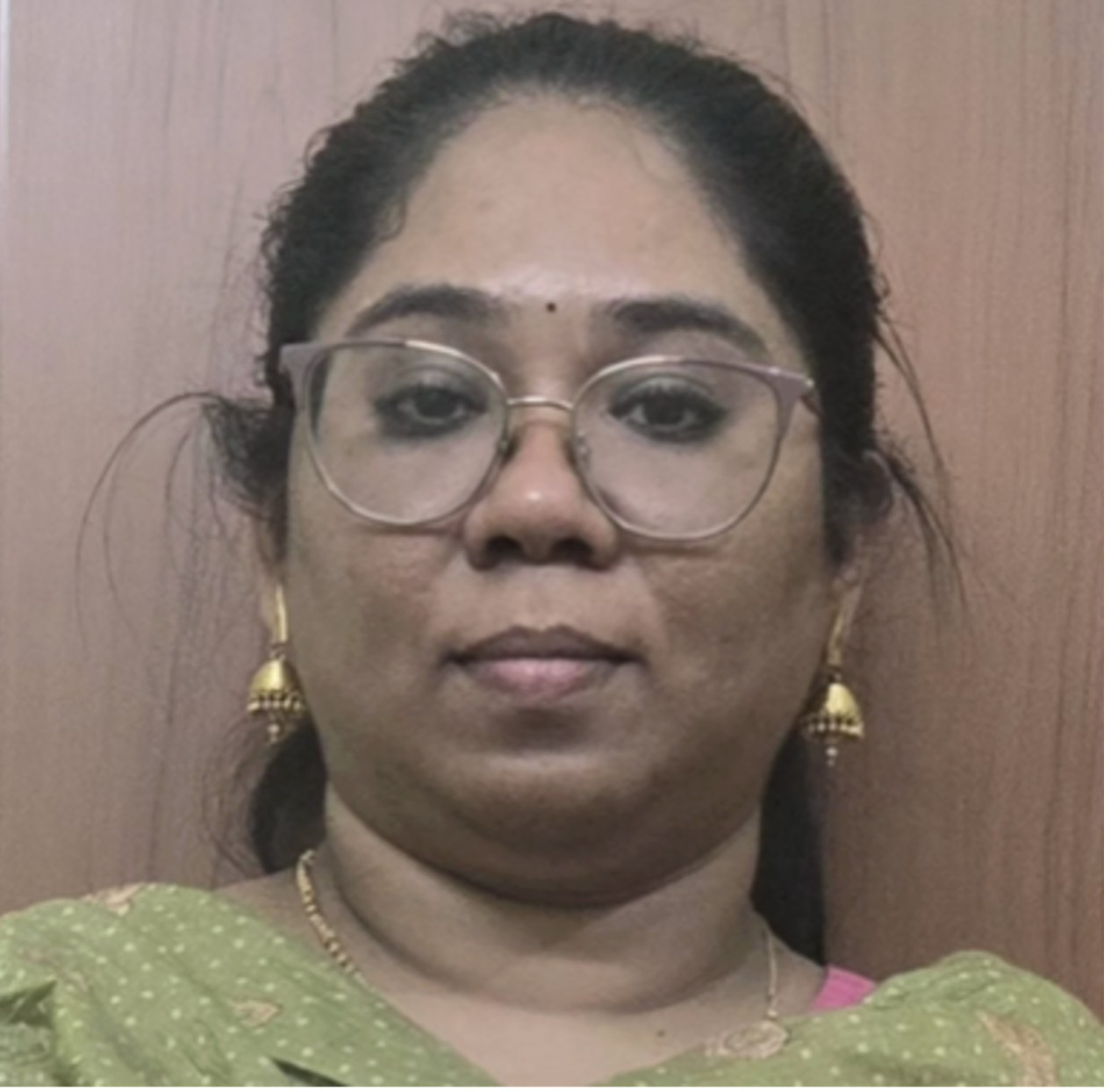
Essays by Devibala Palanivel
Elephant in the Room: Caste and India’s Upper-Class Feminism
By Devibala Palanivel
I am penning this on August 15th, the very day Periyar called “Black Freedom Day” because he saw independence as a mere transfer of power from the British to the Brahmin bureaucracy, where OBCs, Dalits, Adivasis, and minorities continued to be oppressed. The question Periyar posed is still relevant to the contemporary mainstream feminism in India mirrors the same pattern of limited power. While claiming to advocate for women, too often it functions as a power center for upper-class women who focus on issues that affect only themselves.
In independent India, some upper-caste women have reached positions of power, but far more easily than men from oppressed castes. This was possible because pioneers like Savitribai Phule, India’s first woman teacher, defied both caste and patriarchy to open the doors of education. Alongside Savitribai Phule, Jyotiba Phule, Periyar, and Ambedkar envisioned social justice and equality, laying the foundation for the limited gender justice we see today. Yet, upper-caste women who dominate mainstream feminism rarely acknowledge these pioneers. Can we imagine a Sudha Moorthy, J. Jayalalithaa, or Smriti Irani without their work? Still, none of them give credit. Because, caste, the very foundation of Indian society, benefits these women.
Some ask why feminists should address caste if it is man-made. Can feminism in India thrive without addressing the root cause of women’s oppression? While caste is indeed man-made, it could not have been propagated without the participation of women. Dr. Ambedkar notes in Caste in India that if the rest of Hindu society had not imitated the Brahmins, caste would have remained a local phenomenon. Women, through their acceptance and reinforcement of caste hierarchies, allowed it to flourish, often oppressing fellow women in the process. Even if caste were practiced only by men, would women in positions of power have tried to change it? Do they recognize that women within caste hierarchies suffer additional layers of oppression on top of gender?
The Vachathi mass sexual assault occurred during the tenure of former Chief Minister J. Jayalalithaa and is having lifelong effects on Dalit and Adivasi women due to atrocities committed by the Special Task Force during the search for Veerappan. Even after the case was proven in court, Jayalalithaa did not acknowledge it and instead awarded medals to the perpetrators.
Similarly, Smriti Irani, a Union Minister for a decade, has been connected to the institutional murder of Rohit Vemula, whose Dalit mother continues to struggle for justice. What meaningful efforts did she make for caste-oppressed women while serving as Minister of Human Resource Development and as Minister of Women and Child Development? During her tenure, sexual assaults in Hathras, Unnao, Kathua, and countless other cases were committed by dominant-caste men, yet she remained silent.
What about caste-oppressed women who are subjected to forced hysterectomies to continue working in sugarcane fields, trapped in cycles of debt, or displaced seasonally due to climate change? It seems these women were never considered part of Ms. Irani’s human resource or women’s development agenda. No meaningful action was taken to address caste-based oppression. Sudha Moorthy, often celebrated as a feminist icon, rarely acknowledges Savitribai Phule, the Dravidian movement, or Ambedkar movements that paved the way for her rise to be women entrepreneur. At least, I have not seen any special initiatives within her Infosys foundation aimed at helping marginalized and minority women access mainstream spaces. At the same time, she seems highly concerned with preserving her own privilege and sharing even a spoon with others!
This silence extends to dominant OBC caste women who have the privilege to speak out. Roshni Nadar Malhotra, chairperson of HCL, openly takes pride in her caste, the Nadars, who faced brutal oppression less than a century ago. Yet even today, subcastes of the Nadars are treated no better than Dalits in Western Tamil Nadu. Where is her voice for the women who are oppressed simply for being Nadars? Can these women proudly use the surname “Nadar” and live with basic dignity in that region? In our daily lives, how many dominantcaste OBC women would hire domestic help without first asking about caste?
Are the feminists advocating for POSH and gender equality in boardrooms recognizing Banwarilal Devi, whose struggle against sexual assault by men above her caste led to the Workplace Protection Act ? Those who celebrate International Working Women’s Day rarely acknowledge the 80 percent of women working in informal sectors, most of whom come from caste-oppressed backgrounds. Could these upper-class feminists have reached their positions without these women serving as domestic help, nannies, and labourers? Women working in informal sectors agriculture, domestic work, garment factories, sanitation, construction, and hundreds of other jobs are the backbone of our economy, yet they are rarely considered as “working women.” Many women in bureaucracy and boardrooms actively work to maintain the status quo. For example, they oppose reservations within the 33 percent quota for women MPs. If women with lived experience are absent from these forums, how can their voices be heard or their concerns addressed?
Phoolan Devi, a woman from the Malla community, oppressed both by gender and caste and sexually assaulted by upper-caste Thakurs, fought back to become a Member of Parliament, yet she is still labelled the “Bandit Queen.” Meanwhile, Sudha Moorthy, J. Jayalalithaa, and Smriti Irani are celebrated as strong women or feminist icons. This contrast demonstrates how caste is perpetuated even by women and how mainstream feminism in India largely addresses the issues of upper-class women.
Should caste-oppressed women demand entry into mainstream feminism? No. As Dr. Ambedkar said, failing to give credit to mainstream feminism will make it irrelevant over time. At the same time, we must confront the root causes of our oppression directly and radically in every available space because without caste annihilation, there can be no liberation for women in India.
The Hidden Agenda Behind “Lifestyle Coaching”: Repackaging Right-Wing Ideology
by Devibala Palanivel
A famous Home-schooling influencer has triggered widespread outrage after making deeply insensitive remarks about sexual assault victims. In a closed session, she said that women must “respect and take care of their bodies” to avoid abuse, implying that neglect invites assault. Even more disturbingly, she claimed that the abuse of infants “as young as two or six months old” happens due to their previous birth’s karma.
At first glance, this might seem like yet another instance of victim-blaming in a patriarchal society. But her mention of “karma” points to something larger — a moral framework rooted in religious hierarchy and right-wing ideology that normalizes inequality and shifts blame onto victims.
The Ideological Layer Beneath Lifestyle Coaching
The influencer’s comments are not isolated. They reflect how certain ideologically driven communities use “self-improvement,” “minimalism,” and “parenting” classes to subtly spread regressive beliefs. These groups often detach from their parent organizations and operate independently, which makes it difficult for the public to see them as part of a larger ideological project.
The influencer, who calls herself a minimalist, charges large fees for her courses while urging women not to pursue careers so they can “present themselves fully to their children.” This message is hypocritical. She herself is a working mother of three. One of her clients reported that her sessions extend beyond minimalism, promoting veganism as the “pure” diet and claiming that non-vegan foods increase “sexual arousal,” which she bizarrely links to sexual violence.
Such narratives are not just pseudoscience. They echo Hindutva moral codes that regulate women’s bodies and behaviour. Concepts like karma and dharma are used to justify caste hierarchies under Sanatana Dharma, where suffering and subjugation are seen as deserved consequences of past lives. When such beliefs are dressed up as lifestyle advice, they normalize gender violence, casteism, and inequality — especially among upper and upper-middle-class women with social media influence. The Coimbatore Parenting Network Connection
The influencer was also associated with the Coimbatore Parenting Network (CPN) — not sure about her current status, but she was taking classes under their banner whose members have promoted “natural birthing” and “birth villages.” These spaces romanticize unassisted childbirth and discourage hospital births, endangering maternal health and undermining public efforts to reduce mortality.
The glorification of “natural birth” not only pressures women who undergo C-sections but also creates an exclusionary class divide, as only the wealthy can afford such “wellness retreats.” In another instance, another CPN associated advised women to “sync their menstrual cycles with the moon,” a baseless claim that still gains traction among those who trust these so-called coaches. These trends reveal a pattern spiritualized pseudoscience being used to promote control over women’s choices, framed as “nature” or “tradition.”
The “Trad Wife” Trend: Choice or Conditioning?
This ideological repackaging extends beyond parenting. The rise of the “trad wife” trend, where women voluntarily embrace traditional gender roles under the banner of “choice feminism,” is another example. These influencers romanticize domesticity, encouraging women to find purpose solely in caring for their families. However, these portrayals are far from realistic. Most “trad wives” come from privilege. They can devote hours to cooking or crafting only because of invisible domestic labour provided by maids(Caste oppressed/Dalit women). Ironically, while they preach against women having careers, they themselves monetize this image through brand deals and online content creation.
For ordinary working women, this creates immense psychological pressure, feeding guilt for not being “traditional enough.” In a society like India, still navigating the transition toward gender equality and autonomy, these trends subtly pull women back into the very role’s feminism helped them escape.
The Danger of Ideological Packaging
Parenting and lifestyle networks like these must be scrutinized closely. They often target women during vulnerable periods, pregnancy, postpartum recovery, or early motherhood when emotional and physical exhaustion make them more susceptible to manipulation. Wrapped in the language of empowerment and wellness, these teachings spread regressive, casteist, and patriarchal ideas that harm not only women but society at large. Progressive and liberal organizations must call out these networks openly. When women are led to internalize these narratives, the entire project of social progress slows down. No society can advance when half its population is conditioned to accept submission as virtue.
The influencer’s remarks are not just offensive; they are a symptom of a larger ideological strategy that hides behind “self-help” and “lifestyle” language. What appears harmless at first glance is, in fact, a mechanism to reinforce hierarchy, restrict women’s agency, and justify inequality. To counter this, critical thinking, scientific awareness, and feminist solidarity are essential — because no truly progressive society can exist without women who are free to think, question, and choose for themselves.